This page
is devoted to postcards and photographs of the Grimaldi-SIOSA
fleet. An
alphabetical list of ships on this page is shown below, whilst beneath this
a table links to complete
career histories
in postcards of some of the ships. Below the table is a chronological
fleet list
of company and commercial postcards. SIOSA stands for Sicula
Oceanica Societa per Azioni (of Palermo).
The Grimaldi
brothers were nephews of Achille Lauro, the famous Naples shipowner
(their mother was Achille's sister). They built up a fleet of
cargo ships before WW2. Like Achille Lauro himself, they decided
there was a post-war market for cheap emigrant and refugee ships,
and acquired a number of elderly vessels which received little
upgrading. The emigrant market eventually became more discerning
as competition increased, and the first comfortable Grimaldi
ships were the Ascania and Irpinia (ex-SGTM ships
Florida and Campana), acquired in 1955. Initial
services were from Italy to Central America, but North Atlantic
services were operated later. In 1956 they acquired the Venezuela,
which had previously been the CGT De Grasse, and the Canadian
Pacific Empress of Australia. Following rebuilding for
their Italy-West Indies-Venezuela service, her passenger capacity
increased from 664 to nearly 1500. Venezuela was lost
in 1962, off Cannes. She was replaced in 1965 by the Caribia,
originally the Cosulich, then Italia Vulcania. She was
also lost, in 1972, again off Cannes. Subsequently, Grimaldi
operated the Ausonia on cruises from 1983-96, and carry
up to 55 passengers on various freighters around the world. One
of the brothers then started Grandi Navi Veloci, operating large
cruise ferries in the Mediterranean.
The Grimaldi
brothers initially operated a fleet of cargo ships, only venturing
into emigrant carriers after WW2.
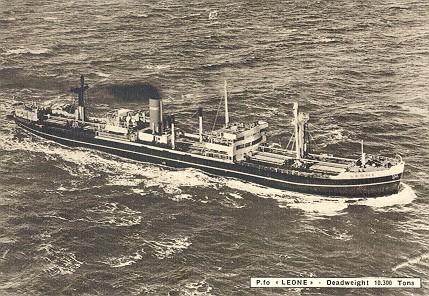
This
is an official Fratelli Grimaldi card of the freighter Leone,
of which I have no other details at present. I include it as
an example of their primary business.
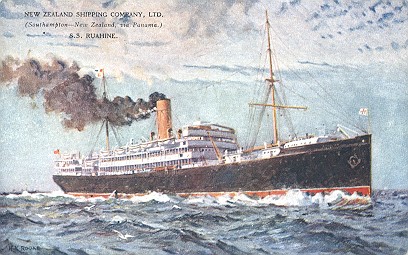
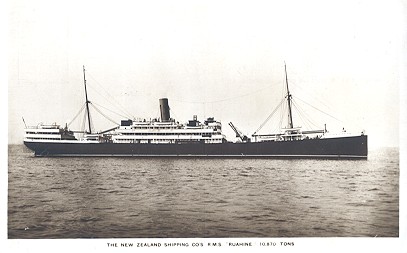
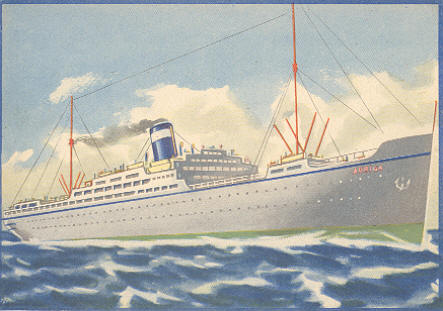
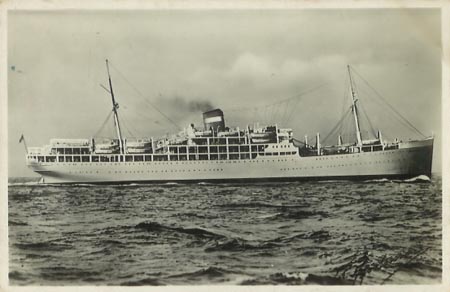
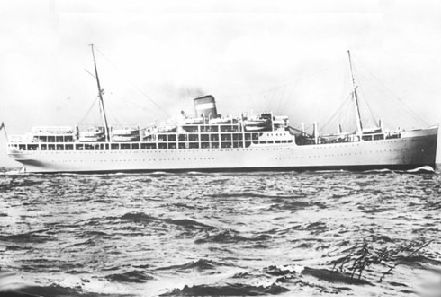
Auriga 1949-57
(ex-Ruahine)
The
Auriga was built as the New Zealand Shipping Company's
liner Ruahine in 1909.
Two
official cards of Ruahine in NZSC colours are shown below.
An
official Fratelli Grimaldi art card of the Auriga.
An
official Fratelli Grimaldi card of the Auriga.
This
scan of an official Grimaldi photograph of the Auriga
has been provided by Jean Grenier. He travelled on her final
voyage from Cannes to Fort de France, via Barcelona, Lisbon,
Vigo, Madeira, Caracas and Pointe a Pitre. He bought the photograph
at the time. As can be seen, she was substantially rebuilt from
the Ruahine.
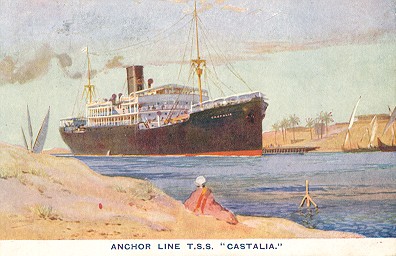
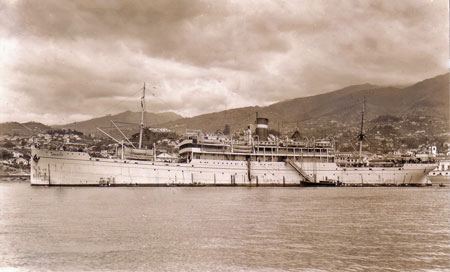
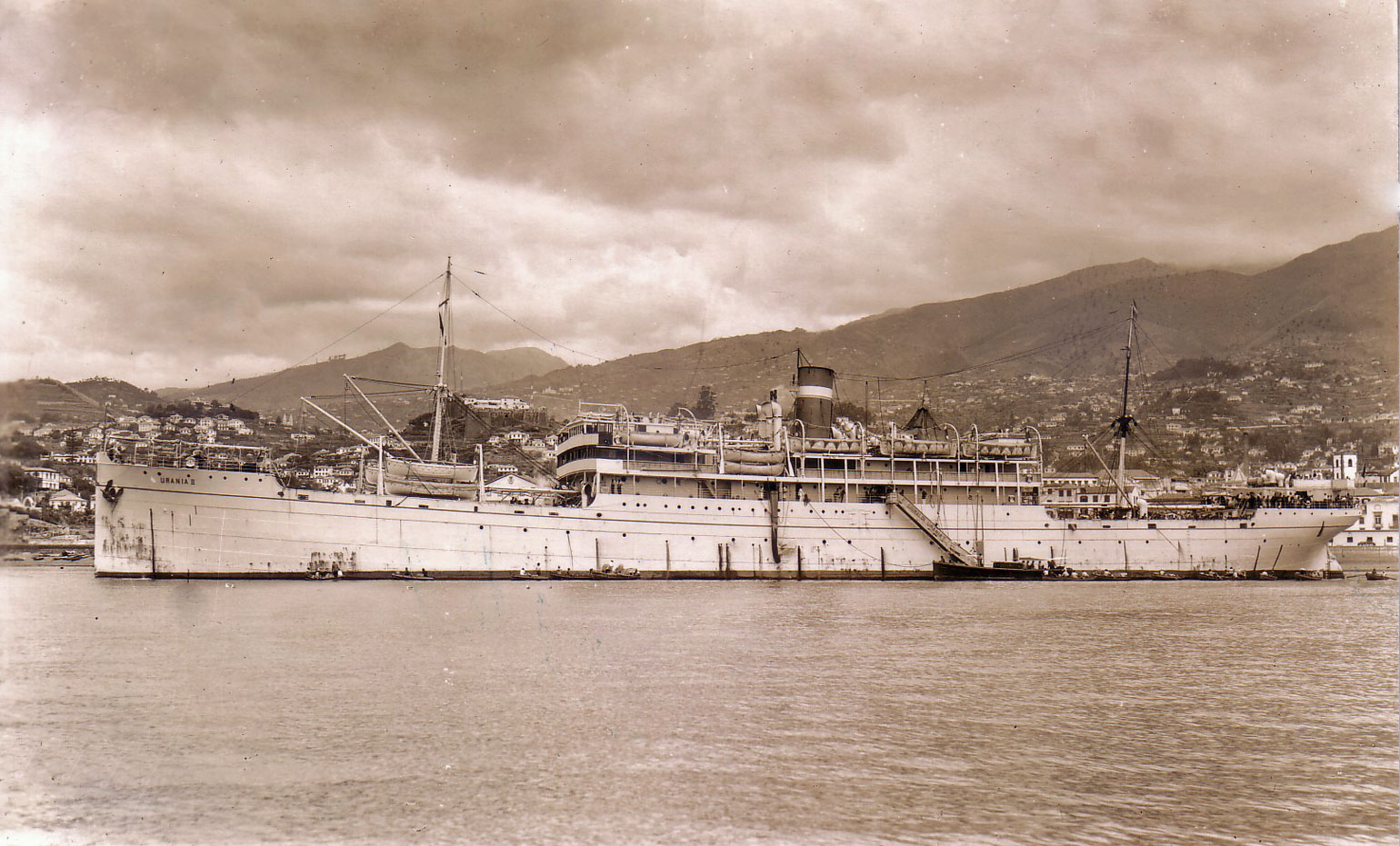
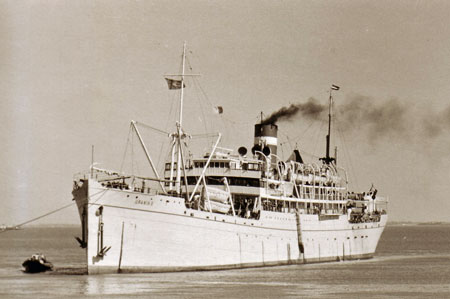
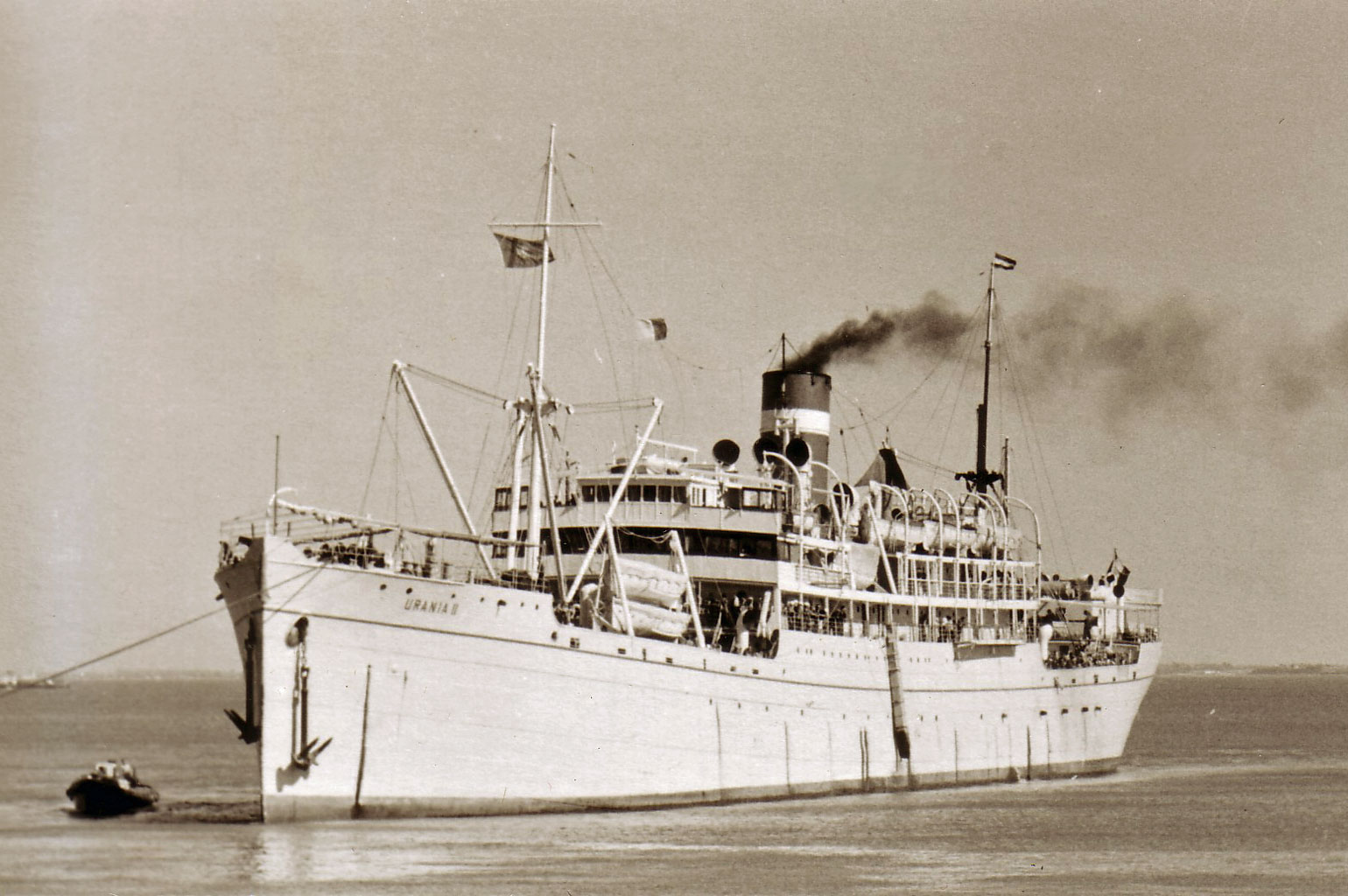
Urania II 1950-54
(ex-Castalia)
The
Urania II was built as the Anchor Line Castalia
in 1906.
An
official Anchor Line card is shown below. I do not have a card
as Urania II.
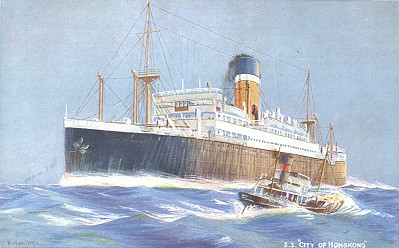
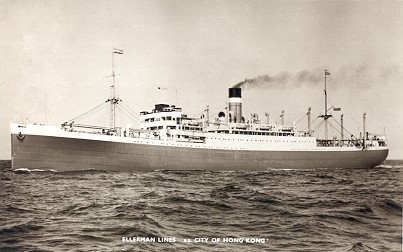
Centauro 1951-55
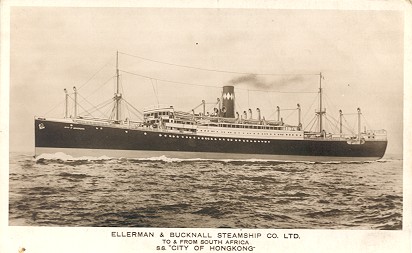
(ex-City
of Hong Kong)
The
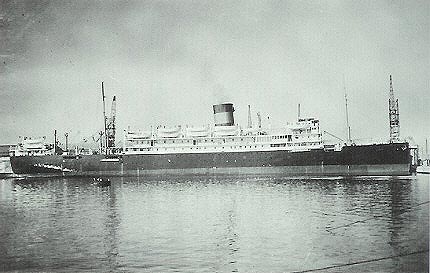
Centauro was built as the Ellerman's City liner City
of Hong Kong in 1924.
Three
official cards are shown below, the third being in Ellerman &
Bucknall colours (used on their South African service).
I
do not have a card as Cetauro.
Lucania 1951-62
(ex-Prince
Robert)
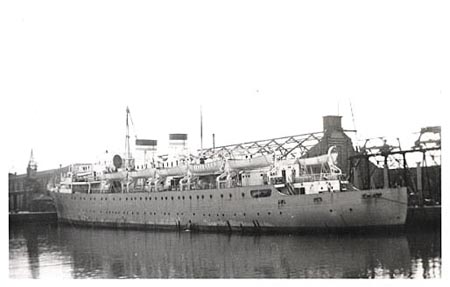
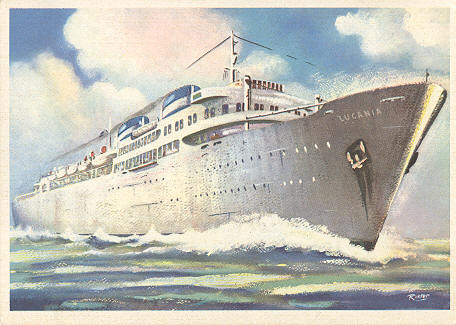
The Lucania
was built as the Canadian National coastal liner Prince Robert,
but had already been substantially modified as the Charlton
Sovereign when bought. She was the first Grimaldi ship to
receive considerable rebuilding before entering their migrant
service to central America.
A
Canadian National card of Prince Robert, is shown below.
Photographic
postcard of Charlton Sovereign.
An
official Grimaldi postcard of Lucania.
An
unidentified photographic card of Lucania is shown below.
Ascania 1955-68
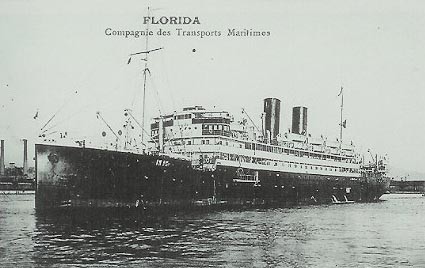
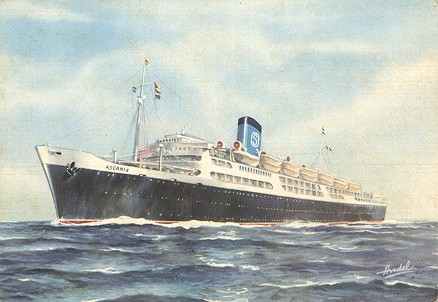
The Ascania
was built as the SGTM liner Florida in 1926. She was bought
by Grimaldi-SIOSA in 1955. She was refitted to carry 183 first
class and 932 tourist class passengers on services from Southampton,
Vigo and Lisbon to the Caribbean and Venezuela. She mainly carried
Spanish and Portuguese migrants outwards, and West Indians on
the return voyage. In 1966, Ascania became a budget Mediterranean
cruise ship.
A
postcard of the SGTM liner Florida with two funnels.
A
later postcard of the SGTM liner Florida as rebuilt with
one funnel.
A
Grimaldi-Siosa card of Ascania is shown below.
Irpinia (Grimaldi-SIOSA: 1955-1981)
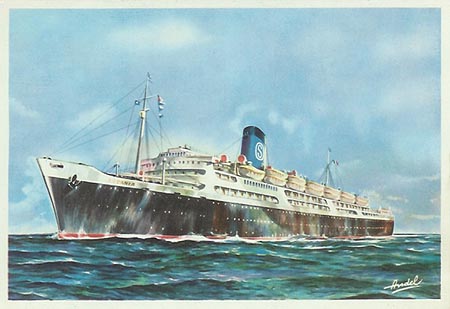
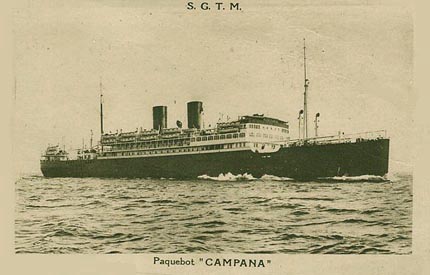
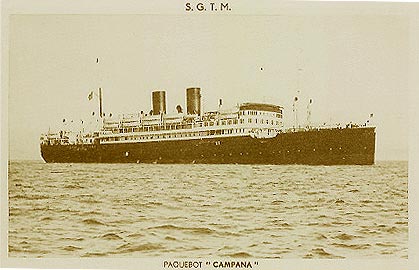
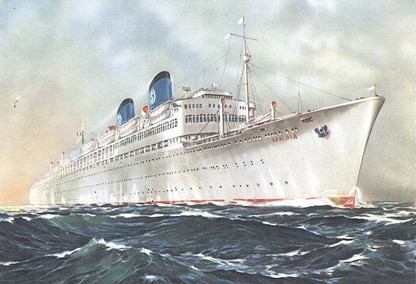
The Irpinia
was built as the SGTM liner Campana in 1929 by Swan, Hunter
on the River Tyne. She sailed from Marseille to the East Coast
of South America, Rio de Janeiro, Santos, Montevideo and Buenos
Aires. After the fall of France in 1940, Campana was laid
up at the latter port, and later seized by the Argentineans,
for whom she ran some trips to New Orleans as the Rio Jachal.
In 1946, she was returned to the French, sailing to South America
again, but also to Indochina. She was bought by Grimaldi-SIOSA
in 1955. She operated from Europe to the Caribbean and Venezuela,
with some crossings of the North Atlantic to Canada or New York.
In 1962 she received a major facelift, returning to service with
only one funnel and Fiat diesels instead of steam turbines. She
returned to the Caribbean route, taking Spanish and Portuguese
migrants westbound, and west Indian migrants eastbound to the
UK. By 1970 she was mainly used for Mediterranean cruising out
of Genoa, at $79 for seven days, or $134 for a 2-week Christmas
cruise to New York and the Canaries. In 1976, just as she was
about to be withdrawn, she was chartered for the making of the
film Voyage of the Damned. After the filming, she unexpectedly
returned to cruising until 1981, at which point she could no
longer get a certificate of seaworthiness in Italy. She was laid
up for 2 years in La Spezia before being scrapped.
A
postcard of the SGTM liner Campana.
A
postcard of the SGTM liner Campana.
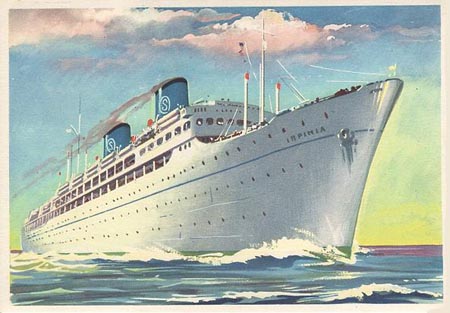
The
picture below shows Irpinia's original two-funnelled state,
on a card giving the company's full title: Fratelli Grimaldi
- Sicula Oceanica S.A.
A
second Grimaldi postcard of Irpinia in original two-funnelled
state.
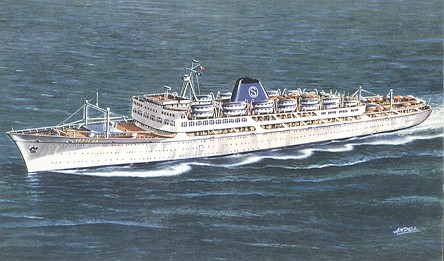
This
Grimaldi-Siosa card shows Irpinia after the 1962 rebuilding.
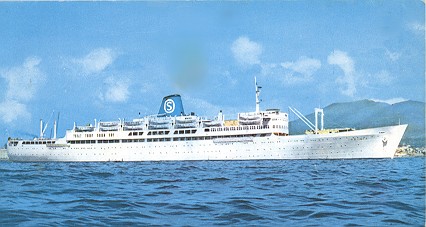
On
this card of Irpinia, the company styled itself simply
as Siosa Line.
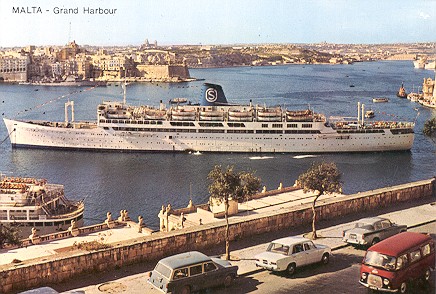
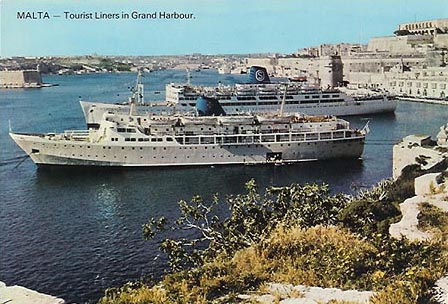
A
well known commercial card of Irpinia, at Malta, published
by Alfred Galea Zimmit (serial G123).
A
second Alfred Galea Zimmit (serial G132) card of Irpinia,
behind Epirotiki's Jason, taken the same time as the
card above..
Venezuela 1956-62
The Venezuela
was built as the CGT Liner De Grasse in 1924. She was
rebuilt after damage during the war, and later served Canadian
Pacific
as the Empress of Australia. She was bought by Grimaldi-SIOSA
in 1956.
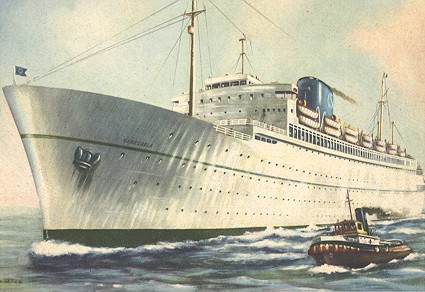
This
is a Fratelli Grimaldi - Sicula Oceanica S.A. postcard.
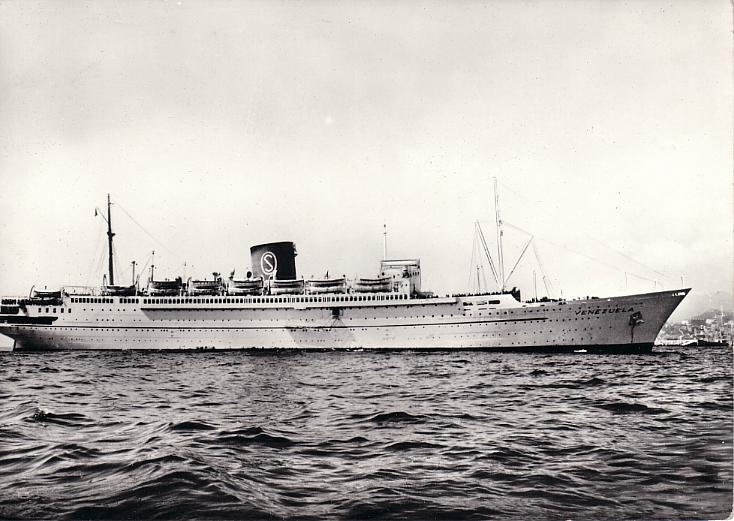
A
later Grimaldi-SIOSA card of Venezuela, showing the raked
bow given in 1960. A full career history of this ship is available
on
this link.
A
further Grimaldi-SIOSA card of Venezuela, showing the
raked bow given in 1960.
Thanks
to Arturo Braam for the scans.
A
full career history of this ship is available on this link.
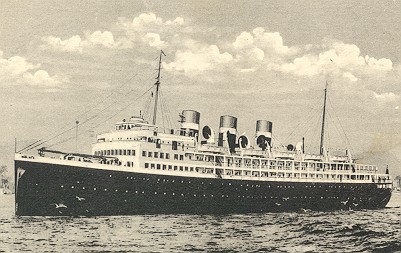
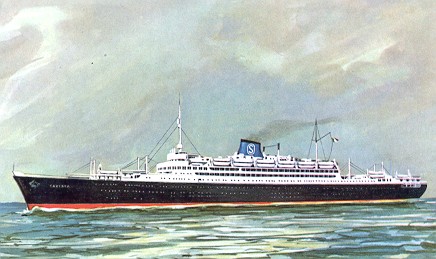
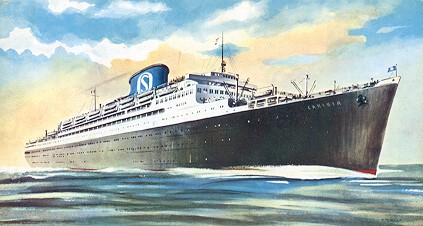
The Caribia
was built as the Cosulich liner Vulcania in 1929. She
was bought by Grimaldi-SIOSA in 1965.
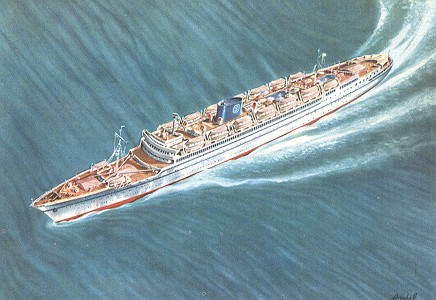
This
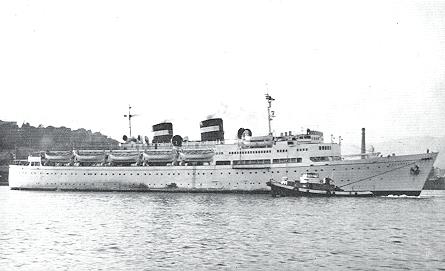
Grimaldi-SIOSA card totally fails to capture the squat, boxy
appearance of this ship.
This
Siosa Line card of Caribia is far more accurate than the
one above.
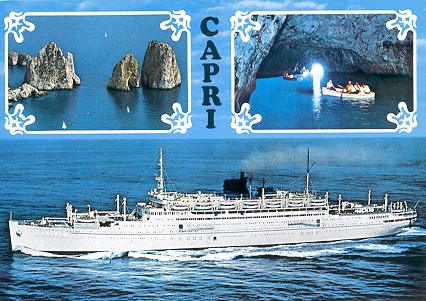
Caribia suffered problems from
soot on the decks, so received a funnel extension as shown below.
This is serial 664/2 by Interdipress, which has the funnel markings
blacked out.
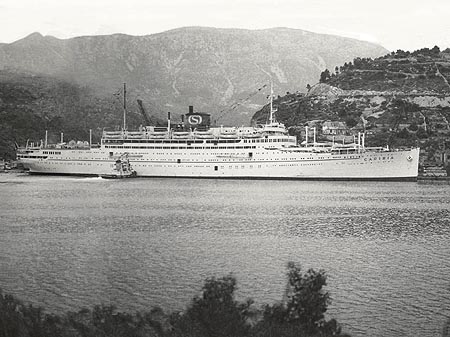
Photograph
of Caribia at Dubrovnik.
Scan:
Ivo Batricevic.
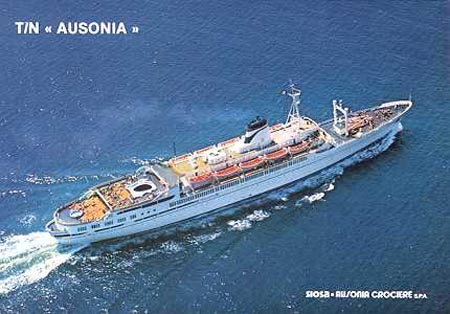
Ausonia 1983-96
Ausonia was delivered from builders
Cantieri Riuniti dell' Adriatico, Monfalcone, to Adriatica SpA
di Navagazione on September 23rd, 1957. She was put into service
on Adriatica's Trieste-Beirut service. In 1978/9, Ausonia
was converted for cruising by Arsenale Triestino SpA, San Marco,
running Mediterranean cruises for Italia Crociere Internazionali
SpA, with 690 passengers. In 1983 she was registered under the
ownership of Ausonia Crociere SpA, of Naples, part of the Grimaldi-SIOSA
group. After a further refit in 1984, passenger numbers increased
to 750. Her current owners are Louis Cruise Lines of Cyprus.
An
official SIOSA-Ausonia Crociere card of Ausonia, now with
additional superstructure aft.
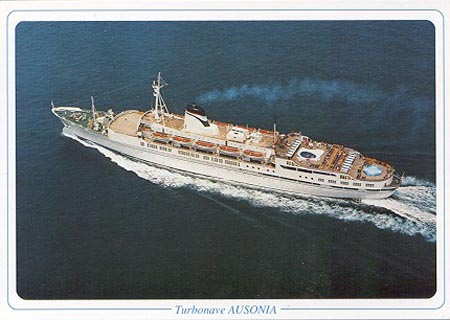
A
later official Grimaldi-SIOSA, Ausonia Crociere card of Ausonia,
clearly showing extra superstructure forward of the bridge.